
300,000 Years
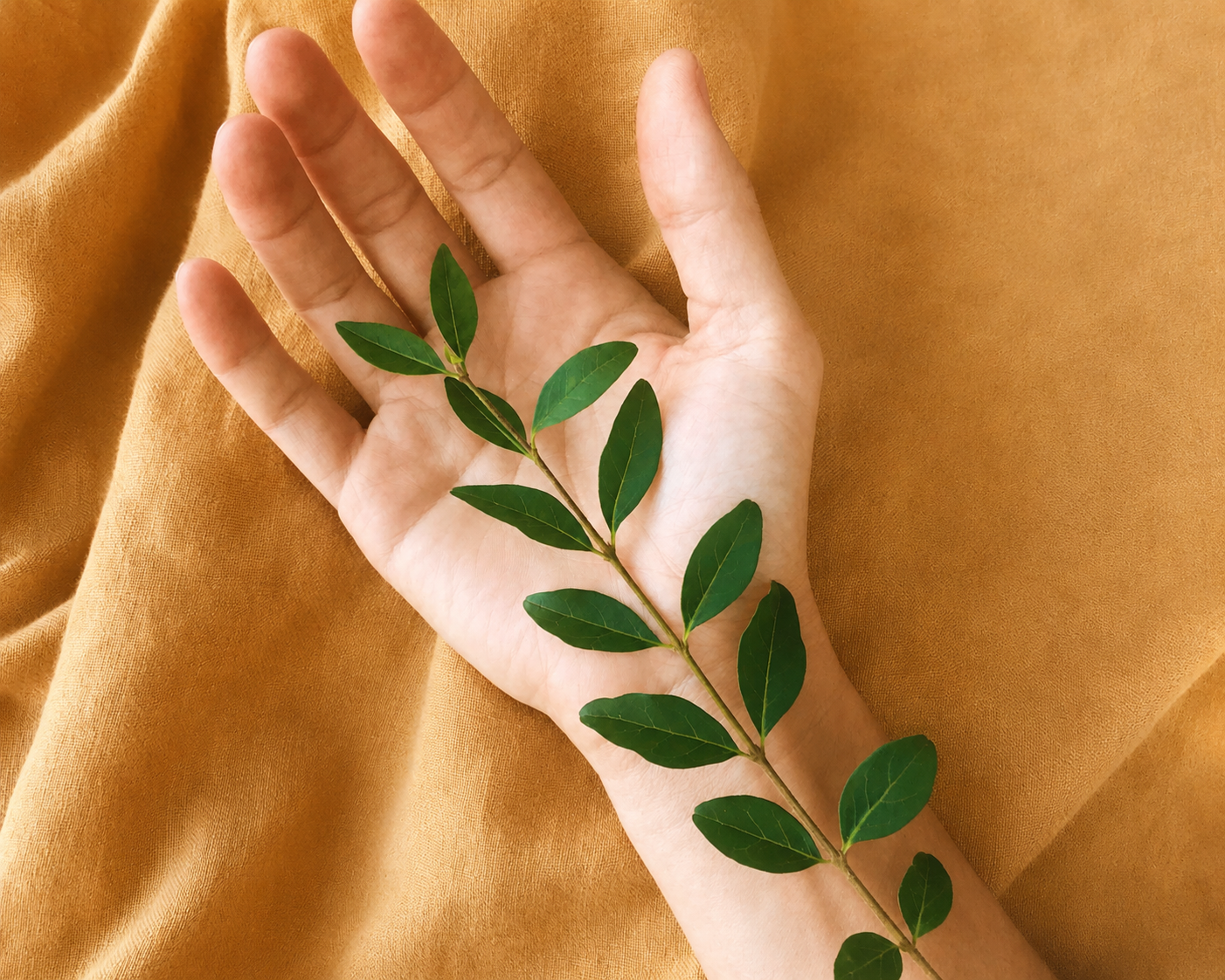
300,000 years.
That’s how long it’s estimated our species has been on this planet in our current homo sapiens arrangement. And for almost all of that time, we lived in incredibly close relationship with the earth: her plants, critters, seasons, weather, and cycles. We made what we needed from what was around us. We learned what nourished us, what healed us, what could harm us, what could be woven, burned, brewed, eaten, planted, and foraged.
That deep knowing of the natural world was not some frivolous hobby or alternative belief system. It is the reason we are here today. Our ancestors survived because they paid attention. They knew that the plants around them were not separate from human life, but deeply entangled with it.
And yet somewhere along the way, we began to tell a different story. We began to treat nature as something “out there,” something separate from us, something optional. Modern medicine can be extraordinary, necessary, and lifesaving. Modern living affords us security and comforts that our ancestors could not have dreamed of. But it is worth questioning the assumption that this ancient way of knowing is somehow irrelevant to our modern lives. It is worth questioning the assumption that plant medicine is somehow lesser when it comes to the common and chronic troubles of being human: stress, grief, inflammation, poor sleep, digestion, nervous system depletion, seasonal allergies, hormonal shifts, and all the everyday ways our bodies require care.
Plants have been tending to life for a very, very long time. The ways they have manifested vary as much as the personalities that show up in humanity. Some are strong and monolithic. Some are gentle and tender. Some grow quickly in one season, some at a crawl for hundreds of years. Some are wildly adaptable, growing through cracks in pavement and poor soil. Some are highly specific, thriving only under the exact conditions they need. Some bend, some climb, some root deeply. Some protect themselves with thorns, resins, bitterness, or scent. Some offer sweetness, some draw boundaries, some restore disturbed ground. There is medicine in what they do, and there is also wisdom in how they exist.
When we hold whatever troubles us in our mind’s eye and look to the natural world, there is often something waiting to be uncovered: a plant showing us resilience, a vine showing us how to reach, a tree showing us patience, a weed showing us how to survive where we never expected to grow. And a flower reminds us that beauty is not frivolous, but part of the great work of being alive.
Living in close relationship with and reverence for the earth is not an alternative lifestyle. It is the original lifestyle. Herbal medicine is not alternative medicine. It is the original medicine.
Sometimes it really feels like humanity has gone off course. The way we live now as a society is not a way of living that can carry us forward another 300,000 years. That alone tells us something. Our long survival as a species is not evidence of our separation from nature, but of the power of living in alignment with it. For most of human history, we knew how to pay attention, how to take only what we needed, how to learn from the living world, and how to understand ourselves as part of it.
Each of us has it within ourselves to begin walking this path again, in small and meaningful ways. Go on a hike. Plant a garden. Ride your bike. Brew a cup of tea. Open your windows. Say hello to a bug. Notice what’s blooming. Learn the name of a plant. Teach your children to be in relationship with the earth. Challenge what we’ve been taught to accept as normal.
And when your body is asking for support, plant medicine is one way to return to that relationship. Our tinctures are made with this in mind: not as a quick fix, but as a small daily way of remembering that the living world is still here, still wise, and still offering us that relationship that lives in our DNA.
Shop our tinctures and find the plants that are calling to you.
Humans are only here today because, for most of our history, we understood something we are now being asked to remember: there is no true separation between us and nature.